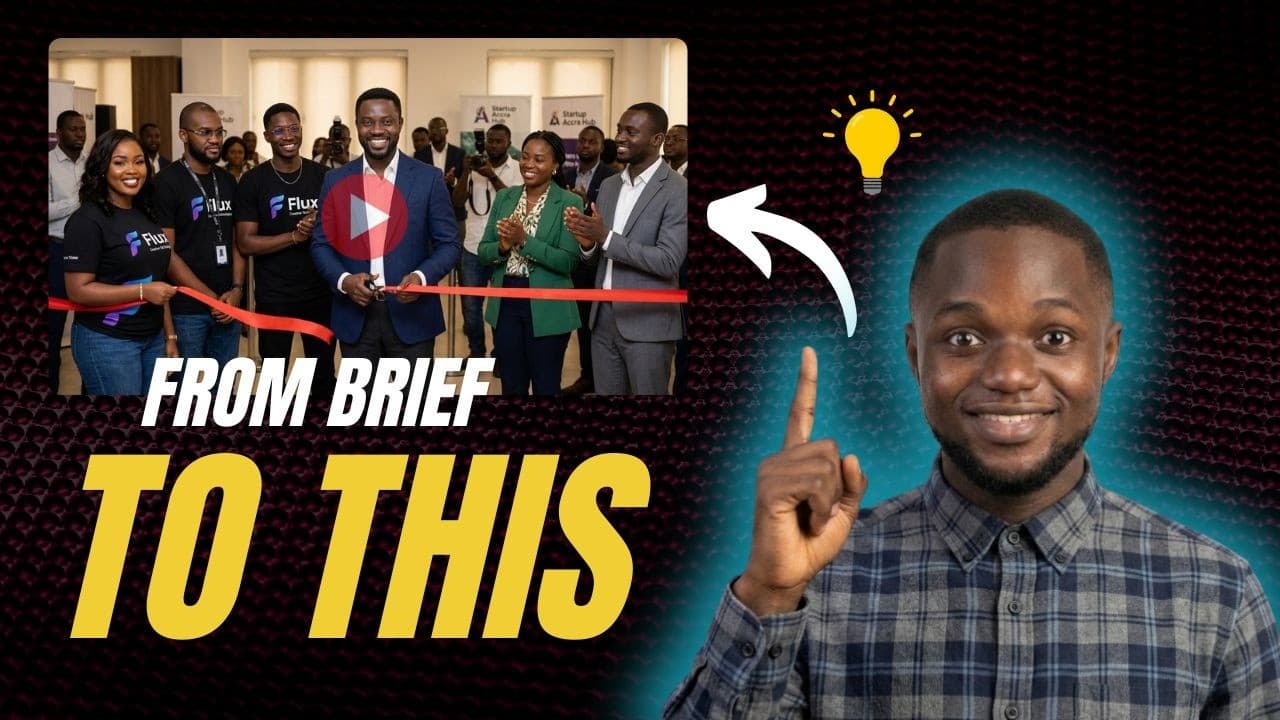
Building a Cinematic Brand Film for Flux Creative Technologies
The Flux Creative Technologies brand film started with a different kind of challenge. This was not only about making a polished video. It was about understanding a company well enough to translate its identity into a cinematic story. The work needed to show research, initiative and creative judgment. The objective was to create a brand film that felt thoughtful, modern and aligned with the company's sense of innovation.
The first stage was research. Before thinking about scenes or tools, I needed to understand what Flux Creative Technologies represented, what kind of audience it spoke to and what emotional territory the brand could own. Technology companies often communicate through capability, but brand storytelling asks a deeper question: what should people feel when they encounter this company? That question became the foundation for the creative direction.
From there, the concept developed around the idea of turning complexity into possibility. A technology brand can easily feel cold if the story only focuses on systems, tools or technical language. I wanted the film to feel human without losing its futuristic quality. The audience needed to sense that Flux was not just building with technology; it was helping shape creative and practical possibilities for people, teams and businesses.
The storytelling decisions were built around clarity, momentum and atmosphere. The structure needed to introduce the brand's world, suggest the problem space and move toward a feeling of progress. In a cinematic brand film, every image should contribute to perception. The visuals are not decoration. They help the viewer decide whether the company feels credible, imaginative and worth remembering.
AI production became a way to explore that perception visually. I used the AI workflow to build scenes that supported the brand tone, from visual planning and prompt direction to motion generation and editing. The challenge was consistency. AI-assisted production can produce impressive moments, but a brand film requires restraint. The images had to feel like they belonged to one world, not a collection of disconnected experiments.
Scriptwriting and pacing helped hold the piece together. The voice of the film needed to sound intentional rather than over-explained. I treated the narration as a guide through the brand's perspective, while the visuals carried atmosphere and emotion. This balance matters in commercial production because audiences do not only process information; they respond to confidence, rhythm and tone.
The editing process focused on building a premium flow. Transitions, shot duration, sound choices and visual order all shaped the final impression. The goal was not to show every possible idea. The goal was to create a controlled brand experience. Sound design helped give the film weight, while the final arrangement made the project feel like a complete statement rather than a collection of AI-generated clips.
The most important lesson from the Flux project is that brand strategy should lead creative production. AI can help visualize a direction quickly, but it cannot decide what a company should mean to its audience. That decision comes from research, interpretation and creative direction. When those pieces are in place, AI becomes a production partner rather than the center of the story.
For me, this project became a useful reminder that the thinking behind a film is often what gives the final piece its value. The finished brand film is the visible result, but the deeper work was learning how to study a company, identify a creative angle and turn that understanding into a cinematic narrative that feels aligned with the brand.
Watch the Full Breakdown
Inside This Documentary
- Research
- Strategy
- Story Development
- Scriptwriting
- Visual Planning
- AI Image Generation
- AI Video Generation
- Editing
- Sound Design
- Lessons Learned
Key Takeaways
- Brand films need interpretation, not just visuals.
- Research helps creative direction feel connected to the company.
- AI production is stronger when the visual world is planned before generation.
- A restrained edit often feels more premium than showing every idea.
- The best brand storytelling turns company identity into audience perception.
Tools Used
Related Entries
How I Created a Cinematic AI Commercial for Crest Team
A complete breakdown of how I transformed a Shopify agency's services into a cinematic commercial - from audience research and storytelling to AI production, editing and sound design.
Process DocumentaryBehind the Scenes: Developing an AI Commercial for the Flux Campus Scholarship
Behind the scenes of how I developed an AI commercial for the Flux Campus Scholarship — from the original brief and creative concept to AI generation, character consistency, iteration and final editing.
Ready to tell your brand's story?
Whether you're launching a product, building a company or introducing a new idea, I'd love to help turn it into a cinematic story that connects with people.
Start a Project→